Celebrate the Holiday with a Versatile Happy Labor Day Layered Cut File
Labor Day is more than just the unofficial end of summer; it's a moment to honor hard work, celebrate achievements, and enjoy one last backyard gathering before the seasons change. For creators, small business owners, and hobbyists, this holiday presents a golden opportunity to produce meaningful content and products. However, rushing to create designs at the last minute often leads to stress and mediocre results. This is where having a high-quality Happy Labor Day layered cut file in your digital toolkit changes the game. Instead of starting from scratch, you have a professional foundation ready to be customized for shirts, mugs, banners, and social media graphics.
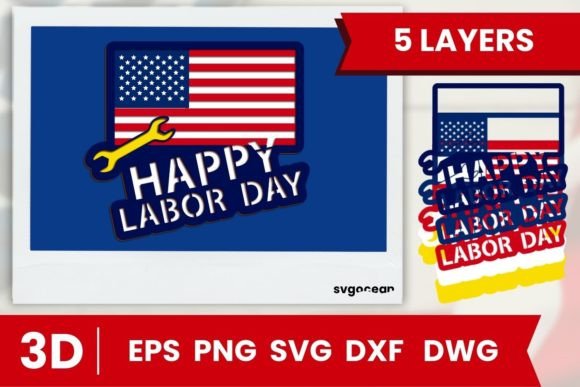
When we talk about a "layered" file, we aren't just referring to a static image. We are talking about a dynamic design structure that separates elements like text, flags, tools, and decorative accents into distinct, editable parts. This distinction is crucial for anyone using cutting machines or design software. A flat image limits you to what you see, but a layered SVG allows you to rearrange, recolor, or remove specific components to fit your exact vision. Whether you are running an Etsy shop selling custom apparel or a teacher making classroom decorations, the flexibility of these files saves hours of manual tracing and alignment.
Real-World Applications for Creators and Businesses
The true value of a Happy Labor Day layered cut file shines when you look at how different people apply it in real scenarios. Consider the small business owner who specializes in personalized gifts. Three days before the holiday, a customer requests a t-shirt that says "Proud Union Member" instead of the standard "Happy Labor Day." With a non-layered PNG, this request would require finding a new font, matching the style, and rebuilding the entire graphic. With a layered SVG bundle containing six different variations, you can simply hide the default text layer, type the new phrase using a matching font, and maintain the original artistic integrity of the design. This agility allows businesses to accept rush orders with confidence.
Educators also find immense utility in these resources. Imagine a vocational school teacher preparing for a Labor Day assembly. They need banners for the gym, stickers for student planners, and graphics for a presentation slide deck. Because the bundle includes formats like EPS and DXF alongside SVGs, the teacher can scale the vector graphics to billboard size for the banner without losing resolution, then shrink them down for crisp printer stickers. The ability to separate layers means they can isolate just the tool icons—hammers, wrenches, hard hats—to create a matching bulletin board border, maximizing the value of a single download.
For bloggers and digital marketers, the timing of content is everything. You might be scheduling Instagram posts or Pinterest pins weeks in advance. A layered file allows you to adapt the color palette of the design to match your brand's specific aesthetic. If your brand colors are navy and gold rather than the traditional red, white, and blue, you can swap the fill colors of the individual layers in Adobe Illustrator or Inkscape instantly. This ensures your holiday content feels authentic to your brand rather than looking like a generic clip-art insertion.
Understanding the File Formats and Compatibility
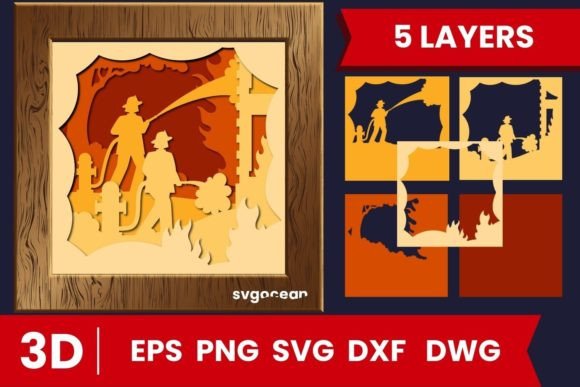
One of the most common points of confusion for new crafters is the variety of file formats included in a typical bundle. A comprehensive Happy Labor Day layered cut file package usually arrives as a single ZIP file containing a robust mix of formats: six SVG files, six PNG files, one EPS, one DXF, and one DWG. Understanding why you need all of them prevents frustration later.
- SVG (Scalable Vector Graphics): This is the workhorse for Cricut Design Space and Silhouette Studio. It preserves the layers, allowing you to assign different cut lines or colors to specific elements.
- PNG (Portable Network Graphics): These are raster images with transparent backgrounds. They are perfect for sublimation printing where layering isn't required, or for quick use in digital documents and websites.
- EPS (Encapsulated PostScript): Ideal for professional designers using Adobe Illustrator or CorelDRAW who need to edit anchor points and bezier curves for print-ready materials.
- DXF and DWG: These are CAD-specific formats. While less common for vinyl cutting, they are essential if you are working with engineering software or specific industrial plotters that require precise coordinate data.
Having this variety ensures that no matter what software ecosystem you inhabit—whether it's the free, open-source Inkscape, the industry-standard Adobe Photoshop, or specialized programs like Sure Cuts A Lot (SCAL)—you have a compatible file ready to go. It eliminates the need to convert files manually, which can sometimes corrupt data or flatten layers unintentionally.
Practical Steps: From Download to Creation
Before you can start creating, there is a necessary technical step: extraction. When you purchase or download the bundle, it will come compressed in a .ZIP file. This is standard practice to keep the multiple file types organized and to reduce download size. However, you cannot open the SVG or EPS files directly from inside the zip folder on many operating systems. You must extract them first.
On a Windows PC, this usually involves right-clicking the downloaded folder and selecting "Extract All." On a Mac, simply double-clicking the ZIP file typically unpacks it automatically into a new folder. Once extracted, you will see the individual files ready to be imported into your design program. Skipping this step is a frequent cause of error messages like "file format not supported" when users try to upload a zipped file directly into Cricut Design Space. Taking thirty seconds to unzip your files correctly sets the stage for a smooth workflow.
Considerations Before You Choose a Design
Not all layered files are created equal, and choosing the right one depends on your intended output. If you plan to use heat transfer vinyl (HTV) for t-shirts, look for designs where the layers are logically separated for multi-color application. Complex gradients or overly intricate details might be beautiful on a screen but difficult to weed (remove excess vinyl) by hand. A good Happy Labor Day layered cut file balances aesthetic appeal with practical cuttability.
Additionally, consider the licensing terms. If you are a freelancer creating assets for a client or a business owner selling physical goods, ensure the license permits commercial use. Most bundles designed for crafters do allow for unlimited physical product sales, but restrictions often apply to reselling the digital files themselves. Understanding these boundaries protects your business reputation and ensures you are respecting the original designer's work.
Ultimately, the goal is to spend less time fighting with software and more time enjoying the creative process or managing your business. By utilizing a well-structured, multi-format layered bundle, you equip yourself with the versatility to handle unexpected requests, adapt to different mediums, and produce high-quality results consistently. Whether you are crafting a single shirt for a family barbecue or producing hundreds of decals for a local event, the right digital assets make the difference between a stressful deadline and a successful project.