Evaluating FSL Holiday Boho DIY Quirky Designs for Modern Embroidery Projects
The intersection of holiday tradition and bohemian aesthetics has created a unique niche in the world of machine embroidery, specifically within the realm of Free-Standing Lace (FSL). The FSL Holiday Boho DIY Quirky concept represents more than just a seasonal decoration; it is a specific approach to crafting that prioritizes texture, dimensionality, and individual expression over uniformity. When exploring options for festive decor or personal accessories, understanding the distinct characteristics of these designs helps crafters determine if this style aligns with their skill level, machine capabilities, and aesthetic goals.
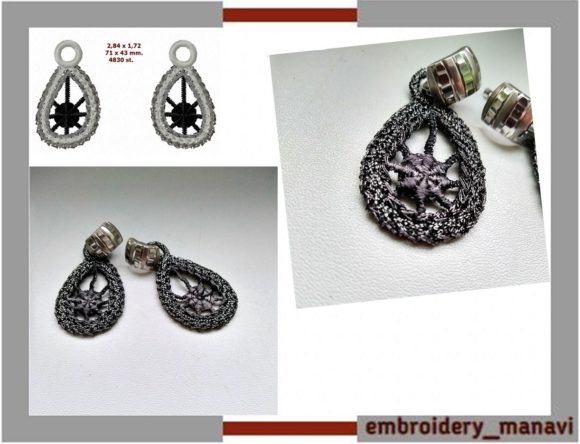
At its core, an FSL design is engineered to be embroidered entirely on water-soluble stabilizer, leaving behind a delicate, lace-like structure once the stabilizer is dissolved. The "Boho" variation introduces organic shapes, irregular textures, and often incorporates natural elements like feathers, beads, or macramé-style knots. The "Quirky" aspect suggests a departure from traditional, symmetrical holiday motifs, favoring whimsical interpretations of winter themes. A prime example of this versatility is found in projects like FSL holiday jewelry boho DIY earrings, where 3D objects are suspended within a small hoop. This specific application highlights the structural integrity required of the design, as it must support weight while maintaining an airy, openwork appearance.
Distinguishing Features and Structural Considerations
What sets the FSL Holiday Boho DIY Quirky category apart from standard embroidery files is the complexity of the stitch architecture. Traditional fill stitches or satin columns are designed to sit on top of fabric, relying on the base material for stability. In contrast, FSL designs must be self-supporting. The digitizer creates a network of connecting stitches that act as the skeleton of the object. For boho-style items, this often means wider gaps between stitch lines to mimic the look of hand-tatted lace or crochet, which can be technically challenging for some machines.
When evaluating these designs, one must consider the "in-the-hoop" (ITH) nature of the process. Unlike appliqué where pieces are cut and sewn later, ITH FSL designs guide the user through a sequence where the final assembly happens within the embroidery frame. For instance, creating the aforementioned 3D earrings involves stitching a base layer, placing a finding or decorative element, and then stitching a closing layer to encapsulate the object. This method ensures a clean finish but requires precise hoop placement and tension management. The inclusion of multiple file formats in professional packages is crucial here, as different machine brands interpret stitch data differently. A design optimized for a high-speed commercial machine might behave differently on a home hobbyist unit, making format compatibility a key decision factor.
Comparative Analysis: FSL vs. Traditional Embellishment Methods
Crafters often weigh FSL projects against other embellishment techniques such as fabric appliqué, resin casting, or polymer clay modeling. Each method offers distinct advantages and tradeoffs.
- Texture and Drape: FSL offers a softness and flexibility that resin or clay cannot match. The lace structure moves with the wearer, making it ideal for jewelry and wearable art. However, it lacks the rigid durability of hardened materials.
- Production Speed: Once the file is loaded, machine embroidery is significantly faster than hand-crocheting similar lace patterns. Yet, it is slower than mass-producing resin casts once a mold is made. FSL strikes a balance, offering customizability without the time commitment of purely manual labor.
- Material Costs: The primary consumable for FSL is water-soluble stabilizer, which can be costly depending on the density of the design. In comparison, fabric scraps for appliqué are often cheaper, though they lack the ethereal quality of lace.
The FSL Holiday Boho DIY Quirky approach is particularly superior when the goal is to create lightweight, intricate items that would be difficult to achieve with fabric alone. The ability to embed 3D objects, such as pearls or metal charms, directly into the lace structure provides a level of integration that sewing on toppings post-production cannot replicate seamlessly.
Assessing Suitability: When to Choose This Style
Deciding whether to invest time and resources into an FSL boho project depends on several variables. This style is an excellent choice for individuals who possess a mid-to-advanced understanding of their embroidery machine's tension settings and hooping techniques. Because there is no backing fabric to hide errors, thread breaks or tension issues are immediately visible in the final lace product. Furthermore, the "quirky" and "boho" elements often require post-processing, such as trimming jump stitches, blocking the lace to shape it, or adding hand-beading, which appeals to those who enjoy a hybrid of machine precision and hand-crafted detailing.
Conversely, this may not be the ideal starting point for absolute beginners. The margin for error is smaller than in standard embroidery. If a user is looking for a quick, durable gift that can withstand rough handling, a dense satin-stitch ornament on heavy cotton might be a more pragmatic alternative. FSL items, while beautiful, are inherently delicate. They are best suited for display pieces, light jewelry, or garments that will not undergo frequent abrasive washing.
Practical Applications and Design Variations
The versatility of the FSL holiday jewelry boho DIY earrings concept extends beyond personal adornment. The same technical principles used to create small hoop earrings can be scaled up for tree ornaments, garland connectors, or even intricate table runners. The "small hoop" constraint mentioned in many design descriptions is actually a benefit for home machines with limited field sizes, allowing users to create complex 3D assemblies without needing large frames.
When selecting a design package, look for files that offer comprehensive instructions. High-quality providers include details on recommended stabilizer weights (often heavy-weight water-soluble is necessary for 3D structures), thread types (polyester vs. rayon), and needle sizes. The presence of multiple formats (.pes, .dst, .exp, .jef, etc.) indicates that the digitizer has considered the diverse ecosystem of embroidery hardware, reducing the risk of file conversion errors that can distort stitch density.
Limitations and Troubleshooting Expectations
It is important to maintain realistic expectations regarding the finishing process. Unlike a standard embroidery patch that is ready once the machine stops, FSL projects require a "wash-out" phase. This involves soaking the stitched item in warm water to dissolve the stabilizer. For boho designs with tight weaves or embedded 3D objects, this process must be done gently to avoid distorting the shape. Some crafters find that starching or using a fabric hardener after drying helps the lace maintain its intended structure, especially for standing ornaments.
Additionally, the "quirky" nature of these designs means they may not appeal to those seeking traditional, formal holiday aesthetics. The boho style embraces imperfection and asymmetry. If the goal is a polished, uniform look for a corporate setting or a formal event, a more classic embroidery style might be preferable. However, for personal gifts, boutique sales, or adding a unique touch to home decor, the organic feel of FSL boho designs offers a contemporary edge that stands out in a saturated market of generic holiday crafts.
In conclusion, the FSL Holiday Boho DIY Quirky genre represents a sophisticated blend of technology and artisanal flair. It is best utilized by crafters who value texture and uniqueness and are willing to engage in the additional steps required to finish free-standing lace. By comparing the delicate, customizable nature of FSL against sturdier, faster alternatives, users can make an informed decision that matches their creative vision with practical constraints. Whether creating a pair of intricate earrings or a whimsical ornament, the key lies in understanding the materials and respecting the limitations of the lace structure to achieve a professional, enduring result.